Everyone is asking the wrong question about vibe coding.
The debate has been stuck in the same loop for over a year now: will AI replace software engineers? Can vibe-coded apps go to production? Is the code secure enough, maintainable enough, good enough?
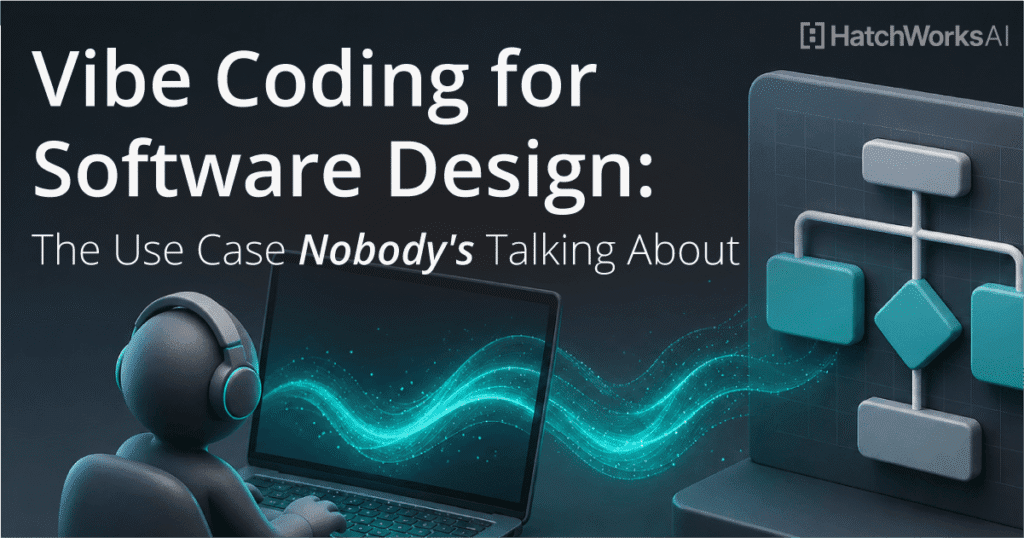
Those are valid concerns. But they’re aimed at the wrong target. Because the most valuable thing vibe coding does has almost nothing to do with shipping production code.
Vibe coding is quietly transforming how software gets designed. Not built. Designed. And the teams paying attention to that shift are compressing weeks of requirements churn into days of collaborative clarity.
Software Design Has Always Been a Communication Problem
Here’s a truth that most engineering leaders know but rarely say out loud: the majority of project failures don’t trace back to bad code. They trace back to bad requirements.
Not “bad” as in poorly written. Bad as in structurally misaligned.
A stakeholder thinks in terms of time-to-market and user satisfaction. An architect thinks in terms of performance and availability. Sometimes they’re referring to the same thing. Most of the time, they’re not. And that gap between intent and interpretation is where projects go sideways.
This isn’t a people problem. It’s a structural one. Business and engineering speak different languages, optimize for different outcomes, and evaluate success with different metrics. Every handoff between those two worlds is an opportunity for context loss. Every requirements document is a translation exercise where meaning gets compressed, nuance gets dropped, and assumptions go unstated until they surface as bugs three sprints later.
The traditional mitigations (design sprints, wireframe reviews, clickable prototypes) help. But they all share the same bottleneck: they require a technical intermediary to produce the artifact. A stakeholder can describe what they want. A designer or developer has to build it. And between description and artifact, meaning gets lost.
Vibe Coding Removes the Translator
This is where vibe coding changes the equation. Not as a development methodology. As a requirements methodology.
Picture a stakeholder with zero software knowledge sitting down with an AI coding tool. They describe the interface they envision in plain language. The AI generates a working mockup. They iterate on it: “Move that table to the left. Add a filter for date range. Show me what the admin view looks like versus the standard user.”
Within an hour, they have something concrete. Not a slide deck. Not a bullet-point list of acceptance criteria. A functional prototype that shows exactly what they mean.
That prototype becomes a shared artifact both sides can point to and discuss, instead of relying on each other’s interpretation of a requirements document.
This isn’t hypothetical. Sebastian Pinto, a solutions architect at HatchWorks AI, has seen this dynamic play out across engagements:
“Instead of endless meetings full of awkward back-and-forth, both sides can sit down and vibe-code together. A stakeholder can ask AI to mock up an interface exactly as they envision it, ask questions, and iterate on requirements directly. Once they’re happy with the result, an architect can step in and analyze that mockup.”
The architect doesn’t start from a blank page or a vague spec. They start from a working artifact that represents exactly what the stakeholder wants to see. That’s a fundamentally different starting point than a requirements document filtered through two or three layers of interpretation.
From Mockup to Architecture: Where the Real Value Compounds
The mockup-as-shared-artifact concept is powerful on its own. But the second-order effects are where the real ROI shows up.
Pain points surface faster. When an architect looks at a working prototype rather than a written spec, they can immediately identify structural issues that would otherwise hide until deployment. “We can’t derive that metric from the data we have.” “This workflow implies a synchronous integration that will break at scale.” “This permission model conflicts with our existing RBAC setup.”
Those conversations happen in the design phase, not the testing phase. And the cost difference between catching a data model issue in week two versus week twelve is enormous.
Stakeholders become active participants in technical scoping. When a stakeholder sees a working mockup, they flag things they’d never think to put in a requirements document: “This section needs stricter security.” “Only regional managers should see this view.” “We need an audit trail for every change in this workflow.” The prototype makes implicit requirements explicit, because people react to concrete things they can see and interact with.
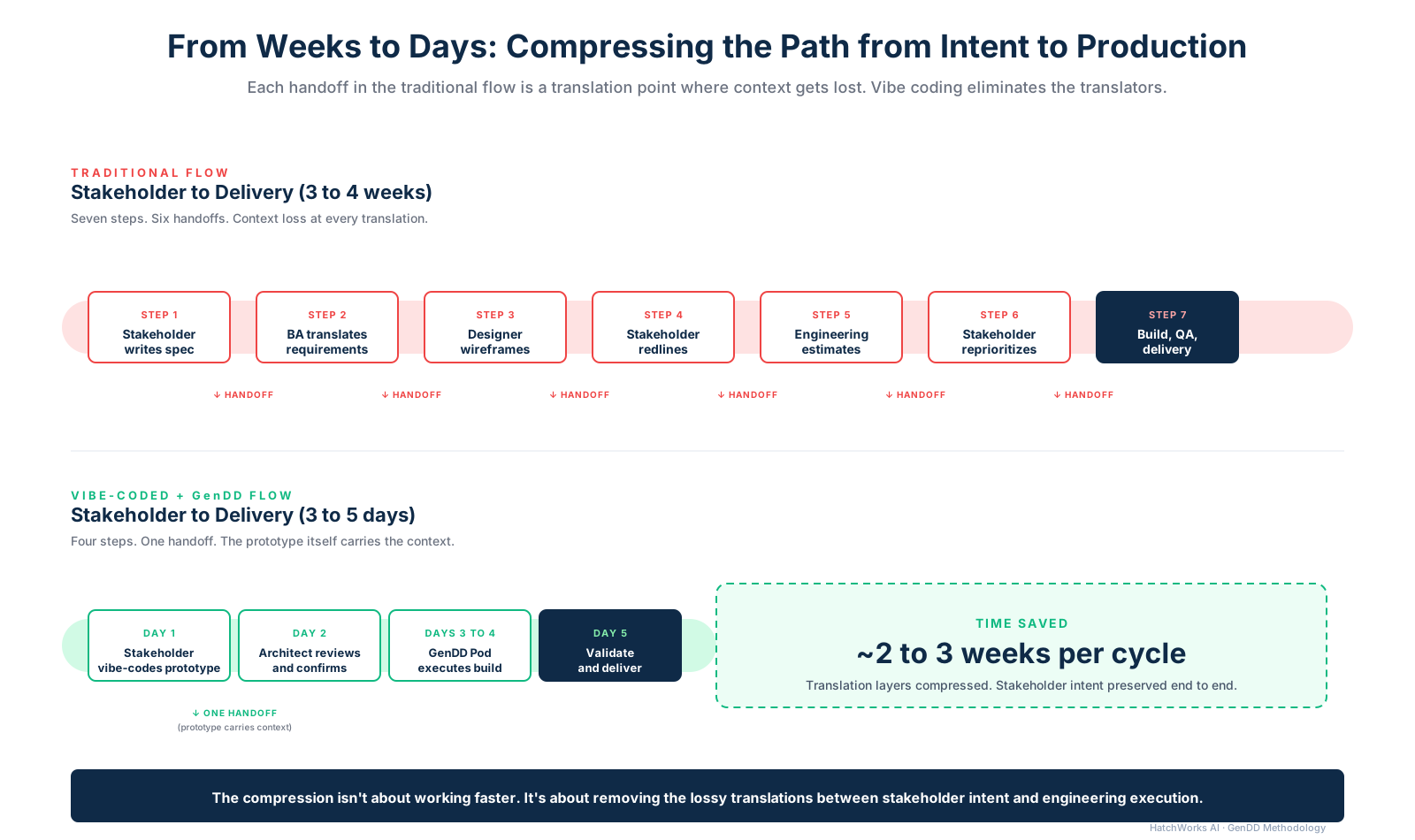
The feedback loop compresses from weeks to hours. Traditional requirements cycles look like this: stakeholder writes spec, BA translates it, designer wireframes it, stakeholder reviews and redlines it, designer revises, engineering estimates it, stakeholder reprioritizes, repeat. That process can take weeks for a single feature. With vibe coding as a requirements tool, a stakeholder can produce and iterate on a prototype in an afternoon, then hand an architect something concrete to evaluate the next day.
Bridging Isn’t New. Doing It Without a Technical Intermediary Is.
To be clear: the idea of bridging the business-to-tech communication gap isn’t new. Mockups, prototypes, design sprints, and clickable demos have existed for years. The GenDD methodology itself is built around the principle that context quality determines output quality.
What changes with AI is who can produce the artifact.
Previously, a stakeholder needed a designer, a front-end developer, or at minimum a product manager with prototyping skills to translate their vision into something tangible. That dependency created a bottleneck. Stakeholders either waited for design capacity or settled for describing what they wanted in words and hoping the translation was accurate.
But the more interesting shift isn’t just who’s holding the mouse. It’s what gets encoded in the artifact.
When a stakeholder builds their own prototype, tacit domain knowledge ends up in the design by default. The way a claims manager groups fields reveals which cases he triages together. The filters an ops director adds first expose which exceptions keep biting her. The defaults a compliance officer sets show which audit questions she’s tired of answering. That’s the knowledge people don’t know they have until they’re interacting with something concrete. It rarely survives a BA interview. It almost never makes it into a written spec.
Earlier methods couldn’t capture that, no matter how collaborative the workshop. Every facilitator and translator in the chain was a filter. Vibe coding lets the person with the domain knowledge leave fingerprints directly on the design.
This Is the Front Half of the Execution Loop
If you’re familiar with Generative-Driven Development, you’ll recognize what’s happening here. Vibe coding for software design maps directly onto the first two steps of the GenDD Execution Loop:
Context (Human): The stakeholder provides business goals, constraints, user needs, and domain knowledge. Instead of writing these down in a document, they express them by building a prototype.
Plan (AI): The AI generates a working interface based on that context. The stakeholder iterates until the prototype accurately represents their intent.
What the stakeholder produces through vibe coding is, in effect, the richest possible context input for the engineering team. It’s a living requirements document that shows rather than tells.
But here’s the critical distinction: vibe coding handles discovery. It doesn’t handle delivery.
The prototype a stakeholder produces is not production software. It’s not architected for scale, security, or maintainability. It’s a communication artifact. And that’s exactly what makes it valuable. It doesn’t try to be more than it is.
The remaining steps of the Execution Loop are where GenDD takes over:
Confirm (Human): An architect reviews the prototype and flags structural concerns: data model mismatches, integration constraints, non-functional requirements the mockup doesn’t account for. This is the step where the stakeholder’s vision gets reconciled with engineering reality.
Execute (AI): AI agents build the production system against the confirmed plan, governed by Context Packs that ensure generated code follows your actual patterns, conventions, and security requirements.
Validate (Human + AI): The output gets verified against acceptance criteria, with automated testing running alongside human review.
Vibe coding without this back half is just prototyping. Useful, but limited. GenDD without this front half relies on written requirements that are always, to some degree, a lossy compression of what the stakeholder actually wants. Together, they form a complete loop from intent to production.
The Quadrant Shift: Fast Discovery, Governed Delivery
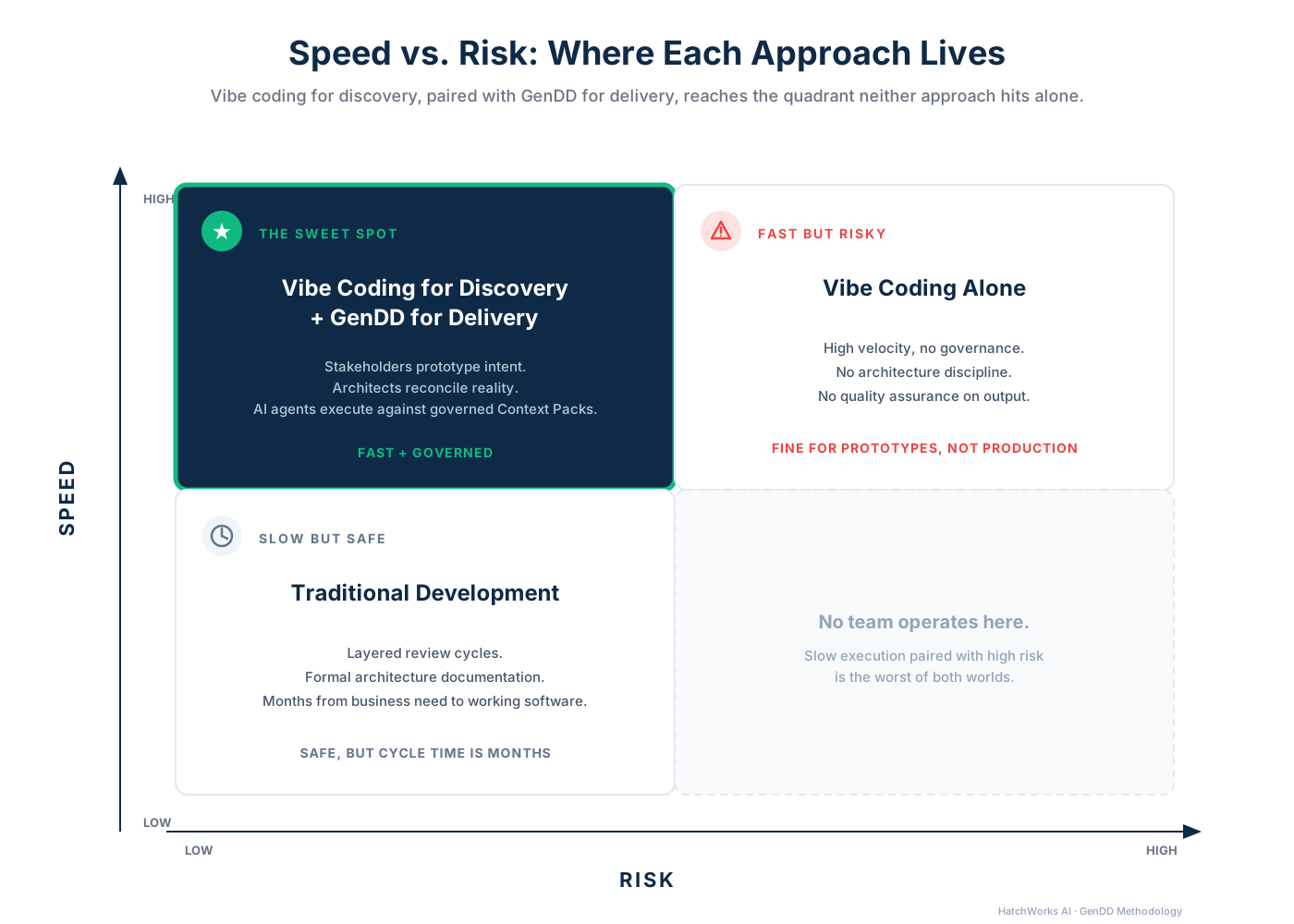
This maps to a framework we use at HatchWorks to evaluate AI development approaches across two axes: speed and risk.
Vibe coding alone occupies the fast-but-risky quadrant. You move quickly, but there’s no governance, no architecture discipline, and no quality assurance on what gets produced. That’s fine for prototypes. It’s dangerous for production.
Traditional development alone is slow but safe. Requirements go through layers of review. Architecture gets formally documented. But the cycle time from business need to working software is measured in months, not days.
Vibe coding for design, paired with GenDD for delivery, moves you into the quadrant neither approach reaches on its own: high speed with low risk. The stakeholder gets the velocity of vibe coding during discovery. The engineering team gets the governance of a structured methodology during delivery. The risk that usually rides along with speed (misaligned requirements, scope creep, architectural surprises in month three) gets absorbed at the front of the process, where it’s cheap to resolve.
What This Looks Like in Practice
Here’s a concrete scenario based on patterns we’ve seen across engagements:
Day 1: A VP of Operations needs a dashboard that tracks fulfillment SLAs across three regions. Instead of scheduling a requirements session with the product team, they open an AI prototyping tool and describe what they want: “Show me a dashboard with real-time SLA compliance by region, a drill-down into individual warehouses, and an alert when any region drops below 95%.”
The AI generates a working interface in minutes. The VP iterates: “Add a weekly trend line. Change the color coding. Show me what the mobile view looks like.” By end of day, they have a prototype that represents exactly what they need.
Day 2: An architect on the GenDD Pod reviews the prototype. They immediately flag two issues: the “real-time” SLA metric would require a streaming integration the current data pipeline doesn’t support, and the drill-down assumes warehouse-level data granularity that only exists in two of the three regions. They propose alternatives that preserve the VP’s intent while accounting for infrastructure reality.
Day 3 to 5: The team confirms the revised plan, and AI agents execute the build using Context Packs that enforce the organization’s coding standards, testing requirements, and deployment patterns. The VP’s prototype becomes the acceptance criteria, not a document that approximates them.
That’s a cycle that would have taken three to four weeks in a traditional requirements-to-design-to-build pipeline. Not because anyone was slow. Because the translation layers between stakeholder intent and engineering execution add unavoidable latency.
The Skill Shift This Demands
This model works. But it requires a mindset shift on both sides.
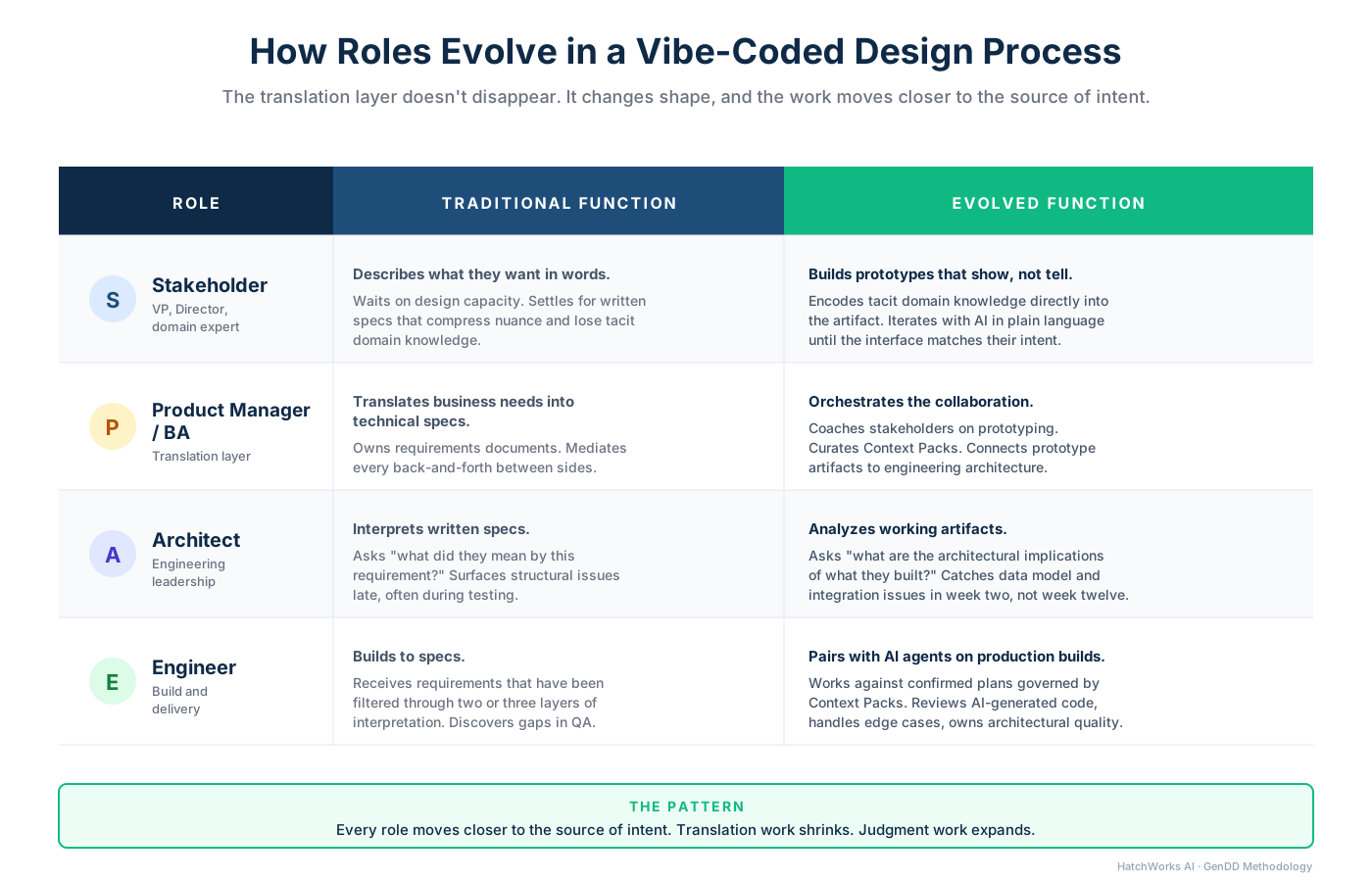
For stakeholders, the shift is from describing to building. That doesn’t mean learning to code. It means learning to interact with AI tools well enough to produce a prototype that accurately represents their intent. The barrier is low (these tools are designed for non-technical users), but it’s not zero. Stakeholders need to think in terms of interfaces, workflows, and data rather than abstract business outcomes.
For architects and engineers, the shift is from interpreting written specs to analyzing working artifacts. That’s a different analytical muscle. You’re no longer asking “what did they mean by this requirement?” You’re asking “what are the architectural implications of what they built?” The input is richer, but the evaluation criteria are more complex.
For product managers and BAs, the shift is the most significant. If stakeholders can produce their own prototypes and architects can analyze them directly, the translation layer that justified these roles in their current form changes. The role evolves from “translate business needs into technical specs” to “orchestrate the collaboration between stakeholder prototypes and engineering architecture.” That’s still critical work. But it looks very different.
Vibe Coding Is Not a Development Methodology. It’s a Design Methodology.
The industry has spent the last year debating whether vibe coding can produce production-ready software. The answer, for anything beyond throwaway prototypes, is: not without serious governance, architecture discipline, and human oversight. The AI developer tools are powerful, but they need a methodology to be productive.
But that debate misses the bigger story.
The real value of vibe coding is upstream. It’s in the requirements phase, the design phase, the “what are we actually building and why” phase where most project failures originate. It’s in giving stakeholders the ability to show instead of tell, and giving architects concrete artifacts to evaluate instead of ambiguous documents.
Vibe coding for discovery. GenDD for delivery. That’s the combination that compresses timelines without compressing quality.
Your team doesn’t have to choose between speed and rigor. They just have to put each one where it belongs.
Ready to see how GenDD turns stakeholder prototypes into production software? Download the GenDD eBook for the full methodology, or explore our GenDD Training Workshop to get your team building this way.